-
Shop
- Adidas
- Advanced Technologies
- AI Skills Mastery 2026 Collection
- Behavior & Emotions
- Best-Sellers
- Budget, Small-Space & DIY
- Car Accessories
- Daily Routines & Care
- Dating & Social Skills
- Digital Resources
- Education & Learning
- Emotional Intelligence
- Everyday Tech Guides
- Family & Lifestyle Tech
- Family & Parenting
- Fashion
- Alexander McQueen
- Bags
- Bags & Wallets
- Balenciaga
- Belts
- Blazers
- Bottega Veneta
- Brunello Cucinelli
- Burberry
- Chanel
- Chloé
- Dior
- Dolce & Gabbana
- Dresses
- Etro
- Fendi
- Gucci
- Hats & Hair Accessories
- Jewelry
- Jil Sander
- Keychains
- Kiton
- Luggage
- Miu Miu
- Off-White
- Outerwear
- Prada
- Rick Owens
- Saint Laurent
- Shoes
- Socks & Tights
- Sunglasses
- The Row
- Tom Ford
- Valentino
- Valentino Garavani
- Versace
- Vivienne Westwood
- Watches
- Feeding & Nutrition
- Furniture
- Gadgets
- Health & Beauty
- Health & Wellness
- Home & Garden
- Home Styling & Organization
- Home Supplies
- Household Cleaning Guides
- Kids & Babies
- Kitchen
- Kitchen & Cooking
- Lighting
- Makeovers & Layouts
- Nike
- Nutrition & Hydration
- Parenting & Family Life
- Patio, Lawn & Garden
- Personal Growth
- Pet Care
- Pet Supplies
- Pets
- Productivity
- Safety & Health
- Sleep & Bedtime
- Smart Homes & Daily Tech Use
- Smartphones & Mobile Devices
- Sport & Outdoors
- Style & Atmosphere
- Training & Enrichment
- Travel
- Wealth
- Popular
- Best deals
Best Colors for Red Hair: Palettes & Outfit Formulas

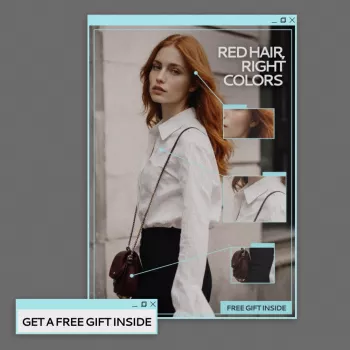
Red Hair, Right Colors: A Digital Color Harmony Guide for Effortless Outfits
Finding colors that flatter red hair can feel inconsistent from season to season and outfit to outfit. The same sweater that looks vibrant in daylight can feel heavy indoors, and a “safe” neutral can suddenly look harsh next to copper tones. This guide simplifies color harmony for redheads—covering undertones, contrast, seasonal direction, and repeatable outfit formulas—so clothing, makeup, and accessories look cohesive without constant trial-and-error.
Why red hair reacts differently to color
Red hair tends to carry built-in warmth—golden strawberry, copper, auburn, or deep red-brown—and surrounding colors either amplify that warmth or mute it. What looks “right” isn’t just about hair, though: skin undertone and overall contrast level make a major difference in how bold, muted, warm, or cool colors read.
- Undertone interplay: Warm copper hair next to the wrong pink can look brassy, while the right green can make hair look richer and more dimensional.
- Skin matters as much as hair: Warm, cool, and neutral skin undertones change which shades feel balanced near the face.
- Contrast level guides intensity: Higher contrast (hair/skin/eyes) often supports clearer, stronger colors; lower contrast typically looks more polished in softened, blended tones.
- Lighting changes everything: Warm indoor light can make oranges and browns feel heavier, while daylight can make cool blues and greens pop sharply against red hair.
Quick color outcomes for red hair
| Color choice | Typical effect | Easy way to use it |
|---|---|---|
| Emerald / teal | Makes red hair look richer and more vibrant | Knitwear, dresses, scarves, statement earrings |
| Cream / ivory | Softens overall look without washing out as much as stark white | Tops, blouses, trench coats, sneakers |
| Camel / warm beige | Creates warm harmony; can look “too same” if contrast is low | Outerwear with a darker base (espresso, navy) underneath |
| True black | High contrast, dramatic; can overpower very fair skin | Use with a bright lip or lighter neckline (ivory, champagne) |
| Cool pastel pink | Can clash with very warm copper tones for some | Try warmer blush/peach instead or keep it as a small accent |
Color harmony basics that make outfits look intentional
Most “something feels off” outfits come down to color relationships. A quick refresher on harmony—based on the color wheel and temperature—helps you build outfits that look styled rather than accidental. For a deeper overview of complementary relationships, see Encyclopaedia Britannica’s explanation of color harmony, and for temperature/undertones, Adobe’s color theory guide.
- Complementary contrast: Greens—especially emerald, forest, and teal—often energize red hair because green sits opposite red on the color wheel.
- Analogous warmth: Rust, terracotta, peach, warm browns, and golds can look seamless; add a grounding neutral so the look doesn’t become “all-over orange.”
- Signature neutral strategy: Repeat one main neutral (navy, espresso, charcoal, olive, or cream) across outfits to anchor accent shades and simplify shopping.
- Metal choices: Many warm redheads glow in gold, bronze, and rose gold; cooler auburns can look especially crisp in silver or mixed metals.
- Print rule that saves outfits: Choose prints that include at least one warm echo (rust, cinnamon, warm tan) so hair looks integrated, not separate from the outfit.
Seasonal palettes for redheads (and how to pick yours)
Seasonal palettes aren’t about rules—they’re about repeatable results. Red hair can appear across all seasons; the trick is matching your overall coloring (undertone + contrast + clarity) to the right level of warmth, depth, and brightness.
- Spring-leaning: Clear, warm, lively shades like coral, warm turquoise, apple green, buttercream, and warm navy.
- Summer-leaning: Softened, cool-to-neutral tones like dusty teal, soft navy, mauve-rose (not icy), dove gray, and gentle sage.
- Autumn-leaning: Rich earthy warmth—olive, moss, warm burgundy, rust, mustard, and chocolate.
- Winter-leaning: Higher contrast with jewel tones—emerald, deep teal, berry, ink navy, charcoal, and crisp cream (often more wearable than stark white).
A fast self-check: hold two tops near the face in natural light—one warm earthy (rust/olive) and one cool jewel (emerald/ink). The one that makes skin look clearer and eyes brighter usually points to your direction.
Outfit formulas that reliably flatter red hair
Common color pitfalls (and easy fixes)
AI styling prompts for quick outfits, capsules, and shopping lists
Digital guide highlight: Red Hair, Right Colors
For a more plug-and-play approach, Red Hair, Right Colors – Digital Style Guide for Redheads organizes color harmony into quick decisions you can use while shopping online or building outfits at home. It focuses on balancing warmth, contrast, and seasonal shifts—and includes ready-to-use styling prompts for capsule wardrobes, occasion outfits, and targeted shopping lists.
If you’re also streamlining spending while rebuilding a wardrobe, pairing it with a simple planning tool like The “Budget Like a Boss” Checklist can make it easier to prioritize the few colors and basics you’ll actually rewear.
FAQ
Do redheads look better in gold or silver jewelry?
Many redheads naturally suit gold, bronze, and rose gold because they echo hair warmth, but cooler auburns (or higher-contrast looks) can also look sharp in silver. The quickest test is holding both metals near your face in natural light and choosing the one that makes skin look clearer and eyes brighter.
Is black flattering for red hair?
Black can be striking on red hair, especially for evening or higher-contrast coloring, but it may feel harsh on very fair, warm-leaning skin. If black overwhelms you, try navy, charcoal, or espresso—or keep black away from the face with an ivory neckline or a stronger lip color.
What are the best clothing colors for natural red hair?
Reliable favorites include emerald/teal, forest green, cream/ivory, navy, olive, and berry, but the best set depends on undertone and contrast. Start with one signature neutral (like navy or cream) and add two accent colors you can repeat near the face.
Recommended for you


Boom Mic for Gaming: Better Comms, Less Noise?
May 14, 2026
Protect Wood Coffee Tables From Water Rings & Heat
May 14, 2026









Leave a comment