-
Shop
- Adidas
- Advanced Technologies
- AI Skills Mastery 2026 Collection
- Behavior & Emotions
- Best-Sellers
- Budget, Small-Space & DIY
- Car Accessories
- Daily Routines & Care
- Dating & Social Skills
- Digital Resources
- Education & Learning
- Emotional Intelligence
- Everyday Tech Guides
- Family & Lifestyle Tech
- Family & Parenting
- Fashion
- Alexander McQueen
- Bags
- Bags & Wallets
- Balenciaga
- Belts
- Blazers
- Bottega Veneta
- Brunello Cucinelli
- Burberry
- Chanel
- Chloé
- Dior
- Dolce & Gabbana
- Dresses
- Etro
- Fendi
- Gucci
- Hats & Hair Accessories
- Jewelry
- Jil Sander
- Keychains
- Kiton
- Luggage
- Miu Miu
- Off-White
- Outerwear
- Prada
- Rick Owens
- Saint Laurent
- Shoes
- Socks & Tights
- Sunglasses
- The Row
- Tom Ford
- Valentino
- Valentino Garavani
- Versace
- Vivienne Westwood
- Watches
- Feeding & Nutrition
- Furniture
- Gadgets
- Health & Beauty
- Health & Wellness
- Home & Garden
- Home Styling & Organization
- Home Supplies
- Household Cleaning Guides
- Kids & Babies
- Kitchen
- Kitchen & Cooking
- Lighting
- Makeovers & Layouts
- Nike
- Nutrition & Hydration
- Parenting & Family Life
- Patio, Lawn & Garden
- Personal Growth
- Pet Care
- Pet Supplies
- Pets
- Productivity
- Safety & Health
- Sleep & Bedtime
- Smart Homes & Daily Tech Use
- Smartphones & Mobile Devices
- Sport & Outdoors
- Style & Atmosphere
- Training & Enrichment
- Travel
- Wealth
- Popular
- Best deals
5-Tier Cat Tree Tower for Large Cats: Daily Play Hub
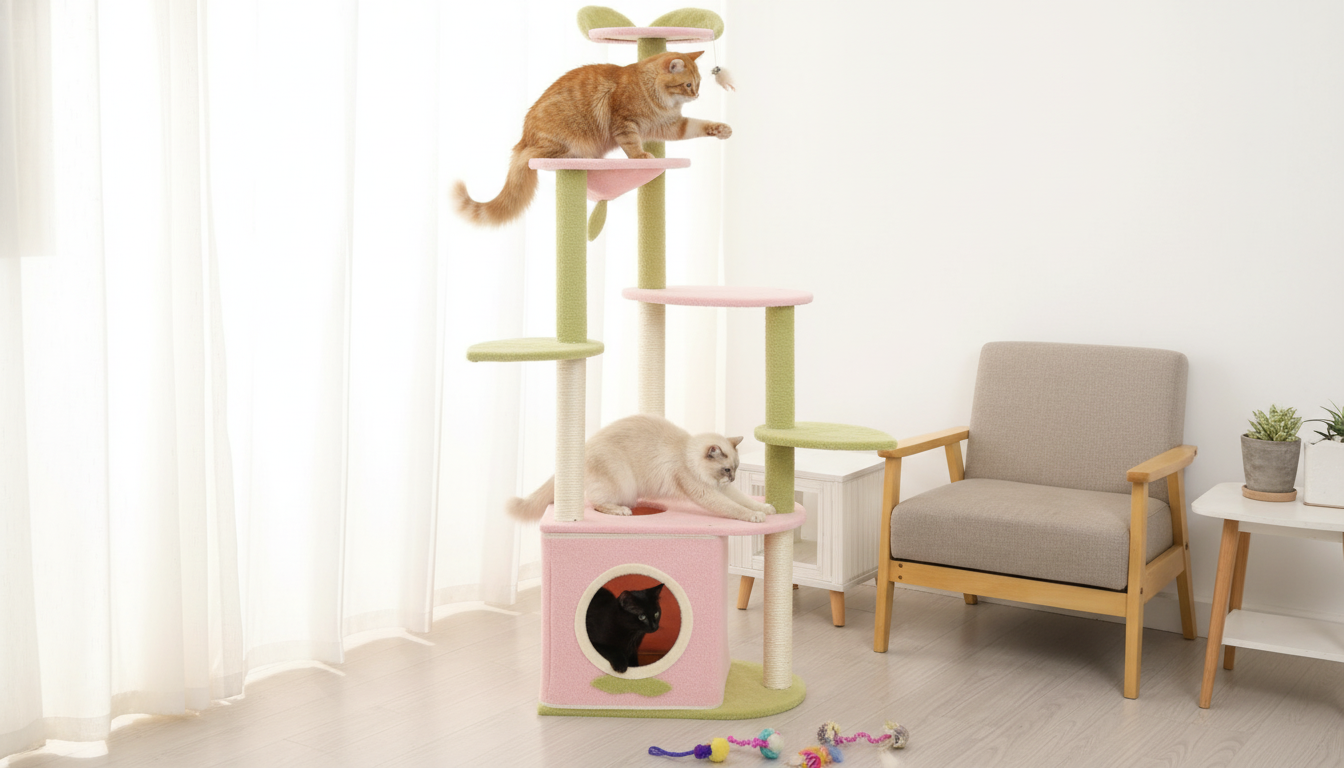
5-Tier Cat Tree Tower for Large Cats – A Vertical Activity Center That Works Hard Every Day
A tall, multi-level cat tree can turn unused vertical space into a daily outlet for climbing, scratching, lounging, and lookout time—especially in multi-cat homes or apartments where floor space is limited. The 5-Tier Cat Tree Tower for Large Cats – Activity Center with Scratching Posts is built as a one-stop station: stacked platforms for movement and rest, plus scratching posts that give claws a consistent “yes spot” so your sofa doesn’t have to.
What a 5-tier activity tower adds to a cat’s routine
Cats don’t just want more stuff—they want better options. A vertical tower changes how a room feels to a cat by adding routes, perches, and designated scratch zones without taking over the floor.
- Vertical movement supports natural climbing and jumping while keeping the footprint compact.
- Multiple levels create separation options for cats that prefer distance, which can reduce tension in shared spaces.
- Built-in scratching areas provide a consistent, easy-to-find target for claws and full-body stretching.
- Elevated perches support natural lookout behavior; many cats settle more easily when they can watch the room from above.
For additional guidance on creating a supportive home setup, the American Association of Feline Practitioners (AAFP) offers practical Cat Friendly Home recommendations that align well with adding vertical territory.
Quick specs at a glance
This tower is designed as a multi-level hub—one piece that can cover play, scratch, and rest needs. For best daily use, place it near the spaces your cat already likes (where people gather or where sunbeams land), but avoid tight hallways where jumping on and off could cause bumps.
Snapshot of key details
| Feature | Details | Why it matters |
|---|---|---|
| Levels | 5-tier tower design | More choices for climbing, perching, and spacing between cats |
| Primary use | Activity center with scratching posts | Combines play, scratch, and rest in one footprint |
| Cat size focus | Made for large cats | Roomier feel and better day-to-day usability for bigger bodies |
| Availability | In stock | Suitable for immediate setup rather than waiting for restocks |
| Price | 478.01 USD | Helps compare against other multi-level towers in the same category |
Design features that matter for large cats
Large cats benefit most from towers that feel predictable underfoot. When platforms are too small or spacing is awkward, bigger bodies compensate with hesitant jumps, half-committed landings, or avoiding the top levels entirely.
- Platform spacing: Larger cats tend to prefer predictable jumps; evenly spaced tiers help prevent awkward leaps.
- Perch stability: Broad, steady resting spots reduce wobble and increase confidence when turning, stretching, or settling.
- Scratch-post usability: Posts should support a full-body stretch (front paws high, back paws planted) so scratching feels “worth it.”
- Surface comfort: Soft, grippy surfaces help cats feel secure stepping between levels and relaxing without sliding.
Scratching is also a normal maintenance and marking behavior, not “bad behavior.” The ASPCA’s scratching guidance explains why cats scratch and how to redirect it—exactly what a dedicated tower supports.
Where to place it for maximum daily use
Location is the difference between a cat tree that becomes “the spot” and one that turns into a coat rack. Cats like to be near their people and near their preferred sensory zones (sun, windows, quiet corners).
- Place it where your cat already hangs out—living room, near a home office, or next to a sunny window.
- Use a wall or corner when possible: corners often feel more secure and can increase perceived stability.
- Avoid fragile zones: don’t put it right beside breakables or in narrow walkways where a jump could cause collisions.
- For sofa scratching: start by placing the tower near the current “problem spot,” then move it gradually if needed.
Assembly, setup, and first-week success tips
The first week sets the tone. A stable build and a welcoming “scent story” can turn a new tower from suspicious to irresistible.
- Pre-sort parts: lay out hardware and panels by step so assembly stays aligned and frustration-free.
- Test stability: once built, gently rock the structure from the top tier; retighten fasteners if you feel movement.
- Make it instantly appealing: add a familiar blanket or a favorite toy on a mid-level perch; use a pinch of catnip if your cat responds well.
- Reward early use: treat or praise when your cat scratches the posts or lounges on a tier—especially in the first few days.
- Prevent snaggy starts: if claws are needle-sharp, a quick trim can reduce accidental snagging while your cat learns the routes.
Care and maintenance for longevity
Safety checks for multi-cat homes and energetic climbers
In-stock picks you can add to your cart
- 5-Tier Cat Tree Tower for Large Cats – Activity Center with Scratching Posts
- Wireless RGB USB Gaming Microphone with Noise Cancellation & Boom Arm
- Weather-Resistant Luxury Spherical Camping Tent
FAQ
How many cats can use a 5-tier cat tree at the same time?
It depends on each cat’s size and temperament. Multiple tiers help cats share by choosing different levels, but it’s smart to keep at least one additional resting spot elsewhere if one cat tends to guard the highest perch.
How can scratching posts be made more appealing than the couch?
Start by placing the tower close to the current scratching spot and reward scratching on the posts immediately. Scent cues like catnip or silvervine can help, and keeping the posts clean and satisfying matters—cats often switch targets when a texture gets too worn or dirty.
What’s the best way to clean a cat tree tower?
Vacuum frequently, then spot-clean with a pet-safe cleaner and allow it to fully dry before encouraging use again. Avoid strong fragrances that may deter your cat, and test cleaners on a small hidden area first to check for discoloration.
Recommended for you


90,000 BTU Commercial Gas Range with Cabinet Base
May 13, 2026
CK Jeans PU Bag for Men: Clean, Easy Winter Carry
May 13, 2026













Leave a comment