-
Shop
- Adidas
- Advanced Technologies
- AI Skills Mastery 2026 Collection
- Behavior & Emotions
- Best-Sellers
- Budget, Small-Space & DIY
- Car Accessories
- Daily Routines & Care
- Dating & Social Skills
- Digital Resources
- Education & Learning
- Emotional Intelligence
- Everyday Tech Guides
- Family & Lifestyle Tech
- Family & Parenting
- Fashion
- Alexander McQueen
- Bags
- Bags & Wallets
- Balenciaga
- Belts
- Blazers
- Bottega Veneta
- Brunello Cucinelli
- Burberry
- Chanel
- Chloé
- Dior
- Dolce & Gabbana
- Dresses
- Etro
- Fendi
- Gucci
- Hats & Hair Accessories
- Jewelry
- Jil Sander
- Keychains
- Kiton
- Luggage
- Miu Miu
- Off-White
- Outerwear
- Prada
- Rick Owens
- Saint Laurent
- Shoes
- Socks & Tights
- Sunglasses
- The Row
- Tom Ford
- Valentino
- Valentino Garavani
- Versace
- Vivienne Westwood
- Watches
- Feeding & Nutrition
- Furniture
- Gadgets
- Health & Beauty
- Health & Wellness
- Home & Garden
- Home Styling & Organization
- Home Supplies
- Household Cleaning Guides
- Kids & Babies
- Kitchen
- Kitchen & Cooking
- Lighting
- Makeovers & Layouts
- Nike
- Nutrition & Hydration
- Parenting & Family Life
- Patio, Lawn & Garden
- Personal Growth
- Pet Care
- Pet Supplies
- Pets
- Productivity
- Safety & Health
- Sleep & Bedtime
- Smart Homes & Daily Tech Use
- Smartphones & Mobile Devices
- Sport & Outdoors
- Style & Atmosphere
- Training & Enrichment
- Travel
- Wealth
- Popular
- Best deals
How to Pair Shoes and Accessories (7 Easy Steps)
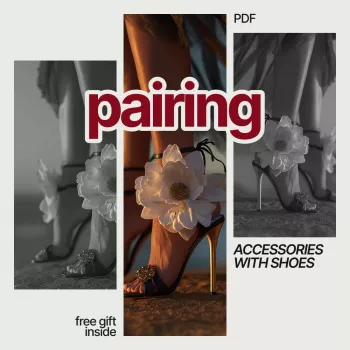
Accessories and shoes do more than “match”—they balance proportions, set the formality level, and create a cohesive color story. The easiest way to look polished is to build outfits the same way every time: start with the setting, choose a color plan, align textures, then finish with a few intentional details you can repeat with what’s already in the closet.
Step 1: Start With the Occasion and Dress Code
Before picking jewelry or a bag, lock in the setting: work, wedding, date night, travel, weekend casual, or outdoors. When the dress code is clear, the accessory choices become obvious.
- Define the setting first: work, wedding, date night, travel, weekend casual, or outdoors.
- Choose a formality lane and stay consistent: sneakers + sporty accessories; loafers/heels + refined accessories; boots + rugged or sleek accents depending on silhouette.
- Use one “hero” item: statement shoes or statement accessories—avoid competing focal points when the outfit is already bold.
- Quick rule: the more structured the shoe, the more structured the bag and jewelry should feel.
Fast pairing map by occasion
| Occasion | Go-to shoes | Best-matching accessories | Avoid |
|---|---|---|---|
| Office / business casual | Loafers, block heels, clean leather sneakers | Structured tote, minimal jewelry, sleek belt, understated watch | Excess sparkle, overly distressed bags |
| Wedding / formal | Pumps, strappy heels, dressy flats | Clutch, fine-metal jewelry, elegant hair accessories | Chunky sport watches, casual backpacks |
| Weekend casual | Sneakers, slides, ankle boots | Crossbody bag, hoops/studs, baseball cap or sunglasses | Overly formal clutches |
| Travel / on-the-go | Supportive sneakers, low boots | Hands-free sling/crossbody, simple layers, durable watch | Heavy dangling earrings, fragile bags |
Step 2: Choose a Color Strategy That Looks Intentional
Color doesn’t have to be complicated; it just needs to look deliberate. A reliable trick is to repeat a color at least twice so it reads as a “plan,” not a coincidence.
- Pick one approach: tonal (same color family), complementary (opposites on the color wheel), or neutral grounding (black/white/tan/gray).
- Repeat a color at least twice: shoe color echoed in a belt, bag, scarf, hair accessory, or jewelry stone.
- Use the “60–30–10” balance: dominant outfit color, secondary, then a small accent that can show up in shoes or accessories.
- Metal matters: cool-toned shoes (black, gray, blue) pair easily with silver/white gold; warm-toned shoes (tan, brown, olive) pair easily with gold/brass—mixed metals can work if repeated.
If you like a more visual approach, a basic color wheel can help you spot complementary and tonal combinations quickly (see Tiger Color’s color theory overview). For an extra layer of polish, consider how color “feels” in a look—high-contrast pairings read bolder, while tonal combinations read calmer (a useful primer is Color Psychology).
Step 3: Match the Material and Texture Story
Even when colors coordinate, mismatched textures can make outfits feel “off.” Aligning materials is one of the fastest ways to make shoes and accessories look expensive and cohesive.
- Smooth leather shoes pair naturally with polished accessories (structured leather bag, sleek belt, refined jewelry).
- Suede shoes pair well with softer textures (knit scarf, brushed leather, matte metals) for a cohesive finish.
- Canvas and sporty materials align with casual accessories (nylon bags, silicone watch bands, minimal jewelry).
- Patent or high-shine shoes call for fewer textures overall—keep accessories cleaner and more refined.
- If mixing textures, anchor with one consistent element (e.g., black leather shoes + black leather belt) and let the rest vary.
Step 4: Use Proportion to Balance the Look
Scale is where many outfits go from “fine” to “styled.” Think of shoes and accessories as visual weights—chunky items want company; delicate items look best with restraint.
- Chunky shoes (platforms, combat boots, dad sneakers): balance with slightly larger accessories (medium-to-large bag, thicker chain, bolder sunglasses).
- Delicate shoes (strappy sandals, pointed flats): pair with refined accessories (small bag, thin belt, minimal jewelry).
- Heel height impacts accessory scale: higher, dressier heels often look best with more delicate jewelry; low shoes can handle more visual weight.
- If the outfit silhouette is oversized, keep accessories streamlined; if the outfit is fitted, accessories can be more statement-driven.
Step 5: Coordinate Key Anchors—Bag, Belt, and Jewelry
When an outfit feels disconnected, it usually needs “anchors”—a few pieces that visually tie shoes to the rest of the look without being matchy-matchy.
Step 6: Add One Signature Detail Without Overdoing It
Step 7: Quick Outfit Formulas to Copy
Shop Tools to Make Styling Easier
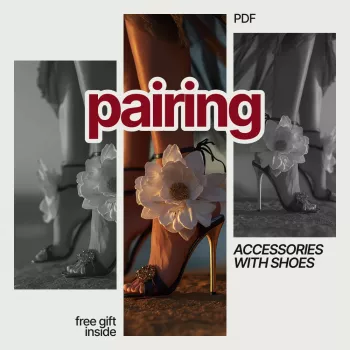
- Pairing Accessories with Shoes Guide: A Step-by-Step Approach to Perfect Style Combinations (digital guide)
- The “Budget Like a Boss” Checklist | Digital Download to Learn How to Budget and Save Money | Easy Printable Budgeting Guide (helpful for planning wardrobe upgrades and accessory buys)
A Simple Checklist for Building Repeatable Combos
FAQ
Do shoes and bag have to match exactly?
No—coordination usually looks more modern than an exact match. Aim to align undertones (warm vs. cool), material vibe (polished vs. casual), or hardware (for example, black shoes with black or silver hardware, tan shoes with warm metals).
How many accessories are too many?
A simple limit is the “rule of three” accessory zones (like earrings + watch + bag). Scale back even more when the shoes are a statement or when the outfit already has a bold print.
What’s the easiest way to pick jewelry when shoes have hardware?
Echo the shoe’s hardware metal once—choose either earrings or a ring that matches, then keep the rest neutral. Mixed metals can still work if the mix shows up in more than one place so it feels intentional.










Leave a comment