-
Shop
- Adidas
- Advanced Technologies
- AI Skills Mastery 2026 Collection
- Behavior & Emotions
- Best-Sellers
- Budget, Small-Space & DIY
- Car Accessories
- Daily Routines & Care
- Dating & Social Skills
- Digital Resources
- Education & Learning
- Emotional Intelligence
- Everyday Tech Guides
- Family & Lifestyle Tech
- Family & Parenting
- Fashion
- Alexander McQueen
- Bags
- Bags & Wallets
- Balenciaga
- Belts
- Blazers
- Bottega Veneta
- Brunello Cucinelli
- Burberry
- Chanel
- Chloé
- Dior
- Dolce & Gabbana
- Dresses
- Etro
- Fendi
- Gucci
- Hats & Hair Accessories
- Jewelry
- Jil Sander
- Keychains
- Kiton
- Luggage
- Miu Miu
- Off-White
- Outerwear
- Prada
- Rick Owens
- Saint Laurent
- Shoes
- Socks & Tights
- Sunglasses
- The Row
- Tom Ford
- Valentino
- Valentino Garavani
- Versace
- Vivienne Westwood
- Watches
- Feeding & Nutrition
- Furniture
- Gadgets
- Health & Beauty
- Health & Wellness
- Home & Garden
- Home Styling & Organization
- Home Supplies
- Household Cleaning Guides
- Kids & Babies
- Kitchen
- Kitchen & Cooking
- Lighting
- Makeovers & Layouts
- Nike
- Nutrition & Hydration
- Parenting & Family Life
- Patio, Lawn & Garden
- Personal Growth
- Pet Care
- Pet Supplies
- Pets
- Productivity
- Safety & Health
- Sleep & Bedtime
- Smart Homes & Daily Tech Use
- Smartphones & Mobile Devices
- Sport & Outdoors
- Style & Atmosphere
- Training & Enrichment
- Travel
- Wealth
- Popular
- Best deals
AI Trend Forecasting: Checklist to Spot Lasting Winners

How to Predict If a Trend Lasts Using AI: A Smart Checklist for Creators and Sellers
Some trends are durable shifts; others are short-lived spikes driven by novelty, memes, or temporary supply constraints. A practical way to avoid wasted inventory, content, and ad spend is to combine human judgment with AI-assisted signal gathering and a repeatable scoring checklist. The goal is simple: estimate staying power early, validate demand cheaply, and set clear “go / pause / stop” rules before scaling.
What “lasting” looks like (and why most trend calls fail)
“Lasting” doesn’t mean a trend grows forever—it means demand stabilizes into a reliable baseline. The fastest way to misread a trend is to treat every burst of attention as adoption.
- Separate a spike, a slope, and a cycle: A spike is sudden attention, a slope is steady adoption, and a cycle is seasonality (like summer gear).
- Look for a repeatable customer job-to-be-done: Trends that solve a persistent problem tend to persist longer than trends that exist for entertainment value alone.
- Identify the adoption engine: Is growth driven by platform algorithms, word-of-mouth, regulation changes, price drops, or a new capability that changes what’s possible?
- Common failure modes: Relying on one platform’s virality, confusing creator buzz with buyer demand, ignoring unit economics, and scaling before validation.
AI-ready signals to collect before making a call
The goal isn’t “more data.” It’s cross-checking signals that come from different behaviors: searching, shopping, and sharing.
- Search demand: Use Google Trends to review interest over time, related queries (“rising” vs. “breakout”), and whether the trend is spreading across regions or stuck in one pocket.
- Marketplace evidence: Track seller count growth, review velocity, price compression, and listing longevity (older listings still gaining reviews or staying visible).
- Social evidence: Repeated use-cases and “how-to” content are stronger than pure reaction content. Practical demos often correlate with real utility.
- Audience fit: Strong trends connect to communities that purchase regularly—hobbyists, professionals, parents, and pet owners often buy in cycles and seek upgrades.
- Supply constraints: If demand looks high mainly because stock is limited, the “trend” may cool once supply normalizes.
- Competitive intensity: Watch ad library density, influencer saturation, and how quickly copycats appear with cheaper variants.
The smart checklist (AI-assisted) creators and sellers can reuse
AI works best as a consistency tool: it gathers, clusters, and summarizes—then you decide with business constraints.
For a ready-to-use template you can apply weekly, see the How to Predict If a Trend Lasts Using AI – Smart Checklist for Creators & Sellers | AI Trend Analysis & Market Validation Guide.
Trend durability scorecard (use a simple 0–2 scoring model)
| Factor | 0 (Weak) | 1 (Mixed) | 2 (Strong) | How AI Helps |
|---|---|---|---|---|
| Problem persistence | Novelty only | Occasional need | Recurring need | Summarize customer pain points from reviews/comments |
| Platform independence | Only works on one platform | Works on two channels | Works across channels | Compare performance signals across sources |
| Search pattern | Single spike | Choppy growth | Steady upward baseline | Analyze interest over time and related queries |
| Buyer intent evidence | Likes only | Some “where to buy” | Clear purchase intent | Classify comments/questions by intent |
| Competitive pressure | Saturated + price war | Crowded but differentiated | Room to enter | Count sellers/ads, detect pricing clusters |
| Unit economics | Low margin/high returns | Acceptable margin | Healthy margin | Estimate price bands + shipping/COGS assumptions |
| Regulatory/compliance risk | High risk | Moderate | Low | Flag restricted categories and claims language |
| Content legs (creators) | One-off meme | A few angles | Many evergreen angles | Generate angle clusters and evaluate novelty |
Market validation experiments that cost less than scaling
To set practical test budgets and stop-loss rules without overthinking it, use The “Budget Like a Boss” Checklist | Digital Download to Learn How to Budget and Save Money | Easy Printable Budgeting Guide.
Red flags that a trend is likely to fade quickly
For sellers, it also helps to keep listing quality and policy constraints in mind early using Google Merchant Center product data guidance, and to run basic competitive checks following the U.S. Small Business Administration’s market research framework.
A practical weekly workflow (15–30 minutes) to stay ahead
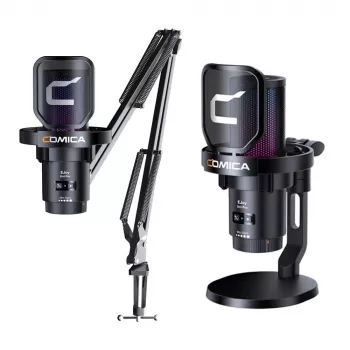
If you want a concrete example product category to practice with, pick something measurable and review-rich (like creator gear). For instance, trend-test content angles and buyer objections around Wireless RGB USB Gaming Microphone with Noise Cancellation & Boom Arm before investing in a full campaign.
FAQ
What data is enough to decide if a trend is worth testing?
A solid minimum is 30–90 days of search interest, at least one marketplace signal (seller count, sales rank movement, or review velocity), and social proof that includes buyer-intent comments (like “where do I get this?”). The key is triangulation across sources so one platform can’t mislead the decision.
Can AI accurately predict trends on its own?
AI can detect patterns, summarize sentiment, and keep scoring consistent, but it can’t replace business constraints like margins, compliance risk, and fulfillment limits. Treat AI as a fast research assistant and hypothesis generator, then rely on small validation experiments to confirm reality.
How often should a trend be re-evaluated once launched?
Re-score weekly during the first month, then move to biweekly or monthly once performance stabilizes. Re-evaluate immediately if CAC spikes, conversion drops, competitors flood the market, or supply issues force price changes.
Recommended for you


Japanese Retro Rattan & Glass Fruit Plate (Handmade)
May 13, 2026













Leave a comment