-
Shop
- Adidas
- Advanced Technologies
- AI Skills Mastery 2026 Collection
- Behavior & Emotions
- Best-Sellers
- Budget, Small-Space & DIY
- Car Accessories
- Daily Routines & Care
- Dating & Social Skills
- Digital Resources
- Education & Learning
- Emotional Intelligence
- Everyday Tech Guides
- Family & Lifestyle Tech
- Family & Parenting
- Fashion
- Alexander McQueen
- Bags
- Bags & Wallets
- Balenciaga
- Belts
- Blazers
- Bottega Veneta
- Brunello Cucinelli
- Burberry
- Chanel
- Chloé
- Dior
- Dolce & Gabbana
- Dresses
- Etro
- Fendi
- Gucci
- Hats & Hair Accessories
- Jewelry
- Jil Sander
- Keychains
- Kiton
- Luggage
- Miu Miu
- Off-White
- Outerwear
- Prada
- Rick Owens
- Saint Laurent
- Shoes
- Socks & Tights
- Sunglasses
- The Row
- Tom Ford
- Valentino
- Valentino Garavani
- Versace
- Vivienne Westwood
- Watches
- Feeding & Nutrition
- Furniture
- Gadgets
- Health & Beauty
- Health & Wellness
- Home & Garden
- Home Styling & Organization
- Home Supplies
- Household Cleaning Guides
- Kids & Babies
- Kitchen
- Kitchen & Cooking
- Lighting
- Makeovers & Layouts
- Nike
- Nutrition & Hydration
- Parenting & Family Life
- Patio, Lawn & Garden
- Personal Growth
- Pet Care
- Pet Supplies
- Pets
- Productivity
- Safety & Health
- Sleep & Bedtime
- Smart Homes & Daily Tech Use
- Smartphones & Mobile Devices
- Sport & Outdoors
- Style & Atmosphere
- Training & Enrichment
- Travel
- Wealth
- Popular
- Best deals
AI Book Writing Workflow: Draft Faster, Revise Better

AI Tools for Writing Books: A Practical Workflow Planner for Faster Drafting and Better Revisions
Writing a book with AI works best when it follows a repeatable workflow: define the promise, design the structure, draft with guardrails, revise with intention, and finish with clean formatting. The goal isn’t to “let AI write the book,” but to use it like a tireless assistant that helps you move faster while you stay responsible for meaning, voice, and accuracy.
What AI Can (and Can’t) Do in Book Writing
AI is strongest when the task benefits from speed and variety. It can brainstorm angles, generate multiple title options, expand a scene draft into a fuller version, summarize research notes, or offer alternate hooks and blurbs. It also helps when you need a second set of “eyes” to point out where clarity is slipping.
It performs best when you set constraints upfront: genre expectations, target reader, tone references, word-count targets, and rules for characters, worldbuilding, or the logic of your nonfiction framework. Without boundaries, outputs often drift toward the bland middle.
Common failure points are predictable: factual errors, invented citations, inconsistent character details, repetitive phrasing, and advice or scenes that feel generic. That’s why several areas should remain author-led: theme decisions, real lived experience, final voice, logic checks, and ethical boundaries around originality.
Set Up a Book-Writing Workflow That AI Can Support
Start with a promise that’s narrow enough to guide every chapter. For fiction, that’s a one-sentence premise plus the emotional experience you want the reader to have. For nonfiction, it’s the transformation claim and who it’s for (and not for).
Next, build a reference pack you can reuse: tone samples, a glossary of key terms, character bios, a timeline, setting rules, or (for nonfiction) your core framework, definitions, and proof standards. This becomes the source of truth you paste into sessions so the writing stays stable.
Before drafting, decide constraints: POV and tense, reading level, a taboo list (what not to include), and a short consistency checklist. Then pick a drafting method that matches your temperament: chapter-by-chapter, scene cards first, or a “messy draft sprint” followed by structured revisions.
Planner-Style Steps: From Idea to Outline to Chapter Plan
AI-Supported Author Workflow Planner
| Stage | Author’s Decision | Helpful AI Output | Quality Check Before Moving On |
|---|---|---|---|
| Concept | Choose core premise and audience | Premise variations, audience pain points, angle options | Single-sentence promise is specific and testable |
| Outline | Lock structure and chapter purpose | Chapter list, beat sheet, argument map | Every chapter advances the promise; no filler |
| Draft | Write with voice rules and constraints | Scene expansions, transitions, alternative dialogue | Voice consistency, no repetition, logical flow |
| Revise | Decide what to cut, merge, or deepen | Reverse outline, critique list, clarity rewrites | Stronger stakes/clarity; fewer redundancies |
| Polish | Finalize language and formatting choices | Style suggestions, readability pass, blurbs | Fact checks done; formatting consistent |
Draft Faster Without Losing Your Voice
Revisions: Turn a Fast Draft into a Strong Manuscript
For nonfiction in particular, fact-check and source-check before polishing. Verify claims and quotations; remove anything uncertain. For general writing standards and editing fundamentals, Purdue OWL is a reliable reference: https://owl.purdue.edu/owl/general_writing/index.html.
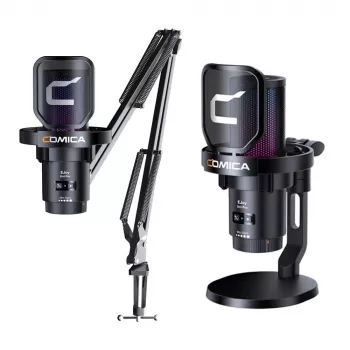
Finish with a “sound pass.” Read aloud to catch tone drift, clunky rhythm, and repeated sentence shapes. If you record your read-through for notes, a dedicated mic can make review easier; the Wireless RGB USB Gaming Microphone with Noise Cancellation & Boom Arm is a simple desktop option for clear playback and quick retakes.
Ethics, Originality, and Safety Checks
Avoid copying. Don’t request imitation of a living author’s exact voice; use high-level tone descriptors and your own voice card instead. If you’re unsure how AI-generated material fits into copyright and registration, consult the U.S. Copyright Office guidance: https://www.copyright.gov/ai/.
Protect sensitive material by removing private data, client details, and unpublished third-party content unless you have permission. For a broader view of risk controls and documentation habits, the NIST AI Risk Management Framework is a strong starting point: https://www.nist.gov/itl/ai-risk-management-framework.
From Manuscript to Publication-Ready Files
Digital Workflow Planner: Instant Download for Repeatable Book Creation
If a consistent process is the difference between starting and finishing, a reusable planner can help keep decisions small and progress visible. The AI Tools for Writing Books Guide – instant download workflow planner is designed to guide outlining, drafting, revising, and polishing with clear quality gates so the manuscript stays coherent and publish-ready.
For writers who like printable structure beyond books, a lightweight planning add-on like The “Budget Like a Boss” Checklist can be repurposed as a simple weekly progress tracker for word count goals, revision passes, and deadline checkpoints.
FAQ
Can AI write an entire book on its own?
AI can generate a full-length draft, but originality, accuracy, and a coherent voice usually require an author-led workflow, careful revisions, and verification. Treat AI output as raw material that still needs your judgment and accountability.
How can a book still sound like one author if AI helps with drafting?
Use a consistent voice card, enforce the same constraints in every session, and maintain a book bible to prevent drift. Finish with a human polish pass, including a read-aloud “sound pass,” to unify rhythm and tone.
What should be checked before publishing an AI-assisted manuscript?
Confirm facts and sources, avoid copying or near-imitation, and ensure the manuscript complies with publisher/retailer policies. Also verify permissions for sensitive material, run formatting checks, and incorporate prioritized beta reader feedback.
Recommended for you

Get Motivated to Clean: 10 Fun Timer Steps That Work
May 14, 2026













Leave a comment